About > History
OUR HISTORY
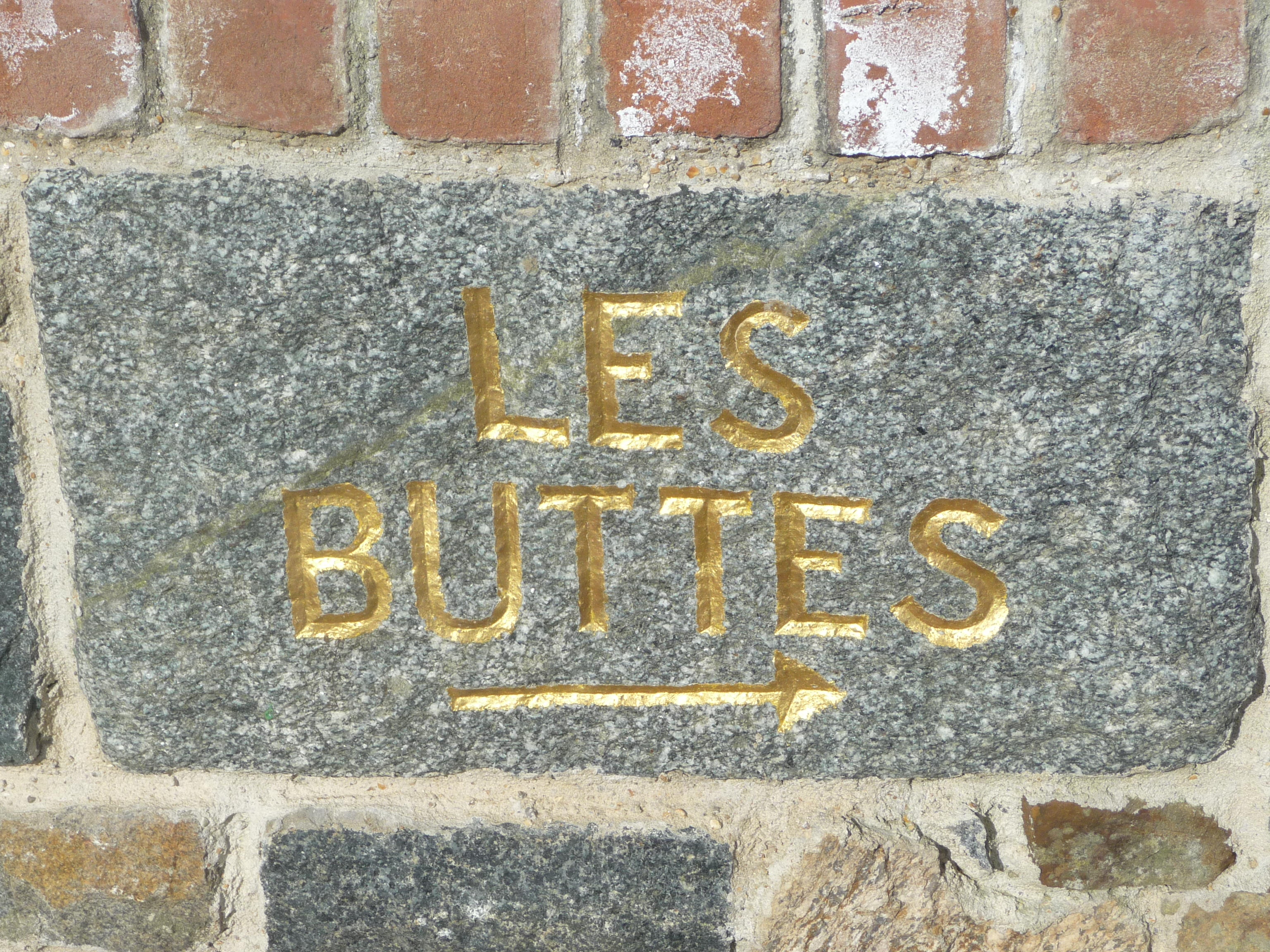
As far back as the fourteenth century, Guernseymen were legally required to learn and maintain proficiency in marksmanship to defend their goods and land. Each parish on the island had a strip of land, Les Buttes (i.e., butts), designated for archery practice.
It is believed that King John ordered that a militia be formed by “the whole manhood of the island” which would defend Guernsey against invasion in return for the privilege of self-government. In later years, the Crown supplied “guns, shot and muskets” to that militia.
Musketry would become of the greatest importance to the Guernsey militia. As early as 1831, the St Peter Port regiment formed the Guernsey Militia Rifle Club with competitions taking place at Fermain, Saints Bay and La Corbière. In the decades that followed, ranges were built at Grandes Rocques, where militia men fired towards Cobo Bay and vice versa towards Grandes Rocques.
In 1860, the year in which the National Rifle Association was established at Wimbledon, the militia was armed with the much improved Enfield rifle. With heightened fear of invasion by France, the British Government renewed a grant of £80 to the militia of Guernsey, Alderney and Sark in 1866, and in 1871, the Guernsey Rifle Club was formed.
That year saw the island’s first full-bore prize meeting take place on L’Ancresse common. The annual meeting quickly became highly popular amongst spectators, and very lucrative to a crack shot with first prizes of £5 being worth approximately £450 in today’s money.
In 1882, Guernsey participated for the first time in the Kolapore international match. By 1885 – just three years later – the Guernsey team finished as runner-up to Great Britain by just over one point per firer over the course of the match.
In 1891, Guernsey’s Winifred Leale – daughter of Colonel Josiah Leale, the officer in charge of the island’s Bisley contingent – became the first woman to shoot in competition at the Bisley Imperial Meeting. Aged just nineteen, Miss Leale attained star-like recognition in newspapers and magazines across the Empire as “the girl shot from Guernsey”.
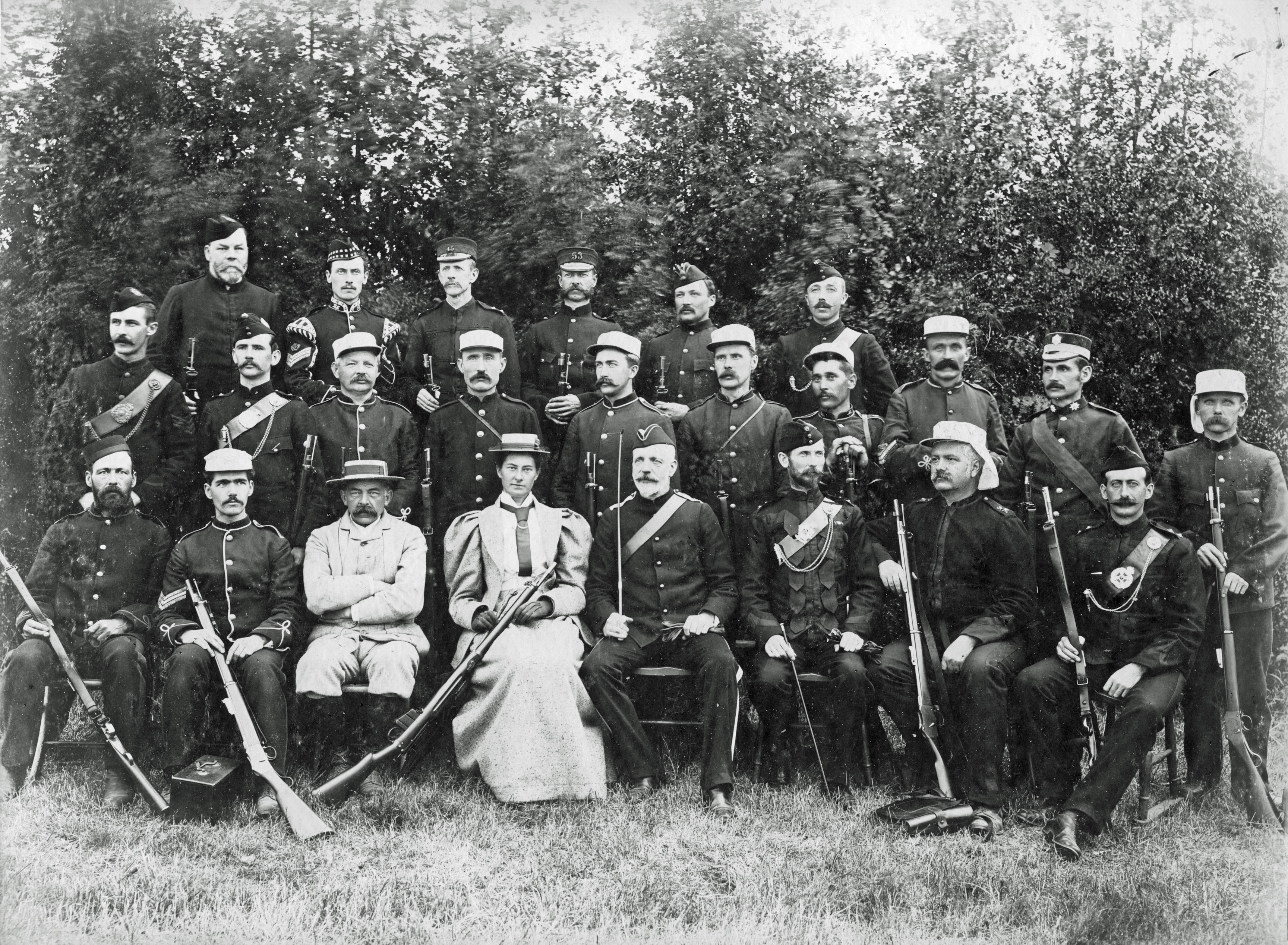
In 1898, Colonel Leale’s Guernsey team – which included the likes of Le Poidevin, Smith, Albigés, Aldrige, Falla, Despointes and Jory – stunned teams from Great Britain, Australia, Canada, India and Jersey to win the Kolapore. Upon their return to the island, the Guernsey team were met at St Peter Port harbour with unprecedented celebration and adulation.
A year later, Private William Priaulx became the first Guernseyman to win Her Majesty the Queen’s Prize. Despite missing his fourth shot to count at 1,000 yards, Priaulx found himself in a three-way tie for first place at the end of the final stage. Priaulx held his nerve and emerged victorious to claim shooting’s most coveted honour.
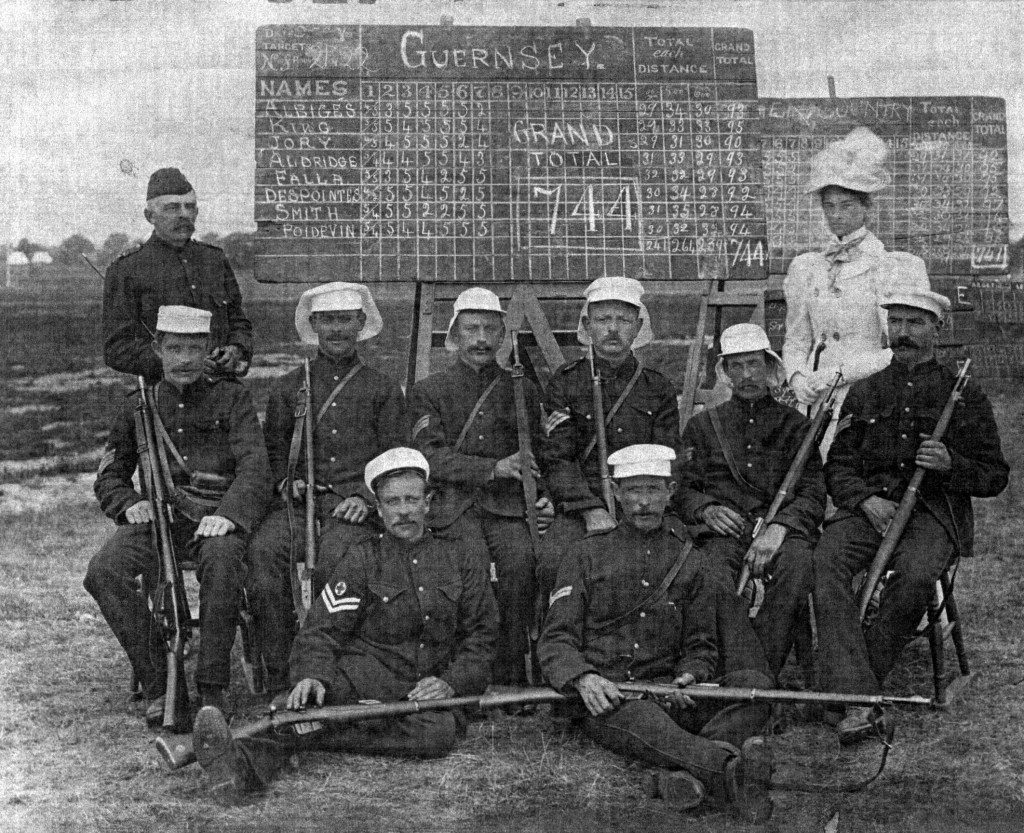
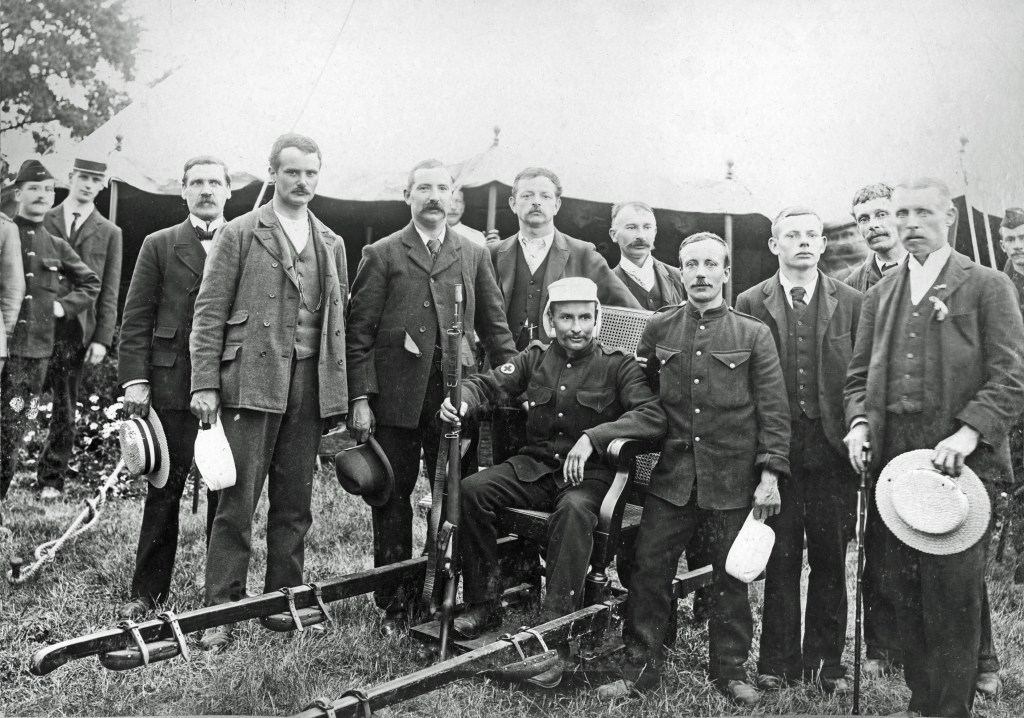
On top of the world: in the space of two years, Guernseymen won the Kolapore match, in 1898, and Her Majesty the Queen’s Prize, 1899.
It would take three quarters of a century for another Guernseyman to be hoisted aloft in the coveted Bisley chair. At the end of the 1975 final, Guernsey’s Charles Trotter found himself in a six-way tie for first place – the first in the history of the competition. After declaring “I like tie-shoots, they bring out the best in me”, Trotter scored 24 out of 25 to finish in first place.
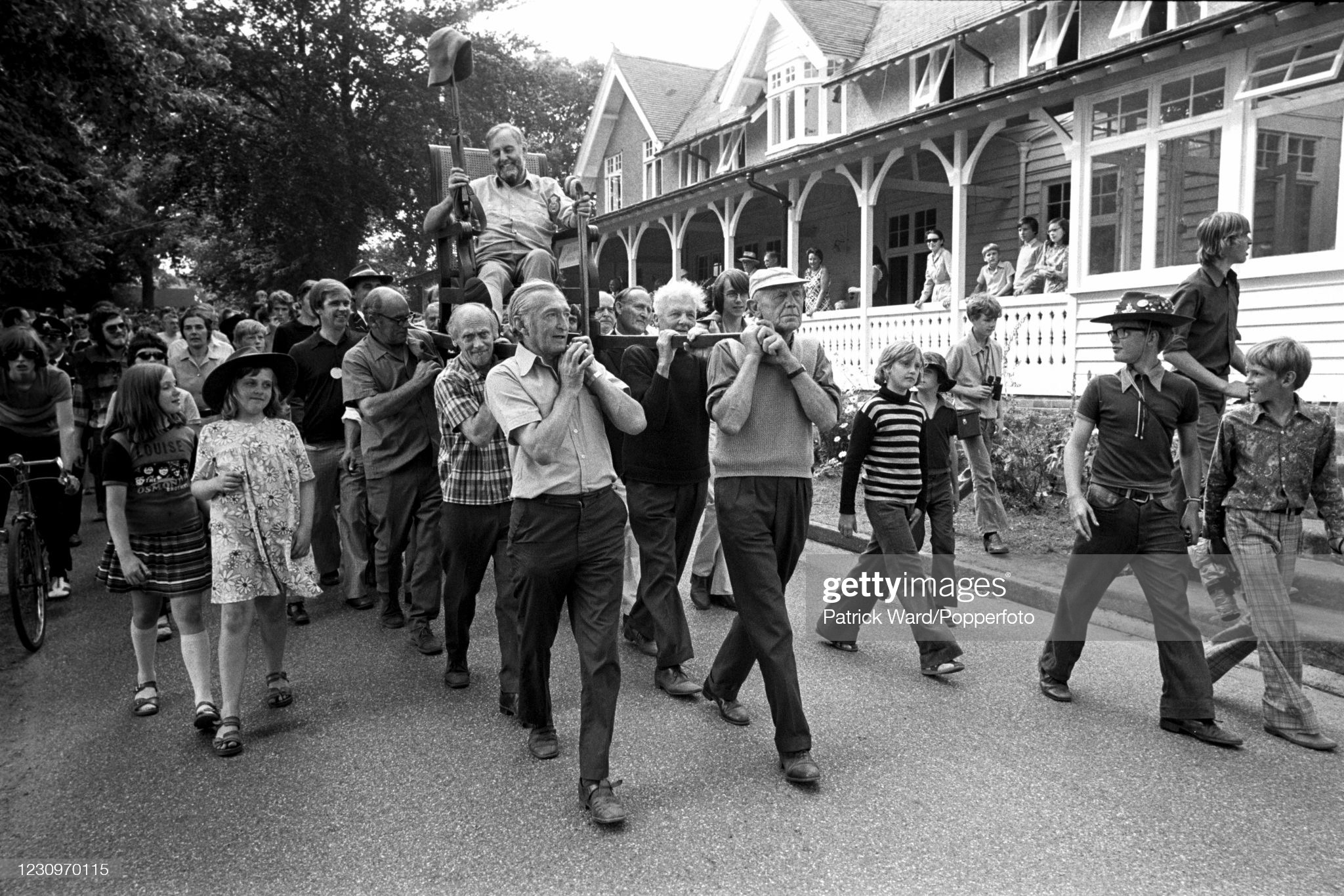
Nick Blampied almost became Guernsey’s third Queen’s Prize winner in 1984, finishing as runner-up by one point. Don Bisset finished 5th in 1912, Adam Jory 6th in 2003 and 10th in 2022, Bob Courtney 6th in 1984 and 9th in 1985, Henry Brock 7th in 1909, Trotter 7th in 1987 and 10th in 1963, Nick Mace 7th in 2017 and 10th in 2012, Nick Thompson 7th in 2022, Fred Cope 8th in 1937, Peter Jory 8th in 2016 and Mike Martel 10th in 1962.
Brock also won the Bronze Medal as top scorer in the first stage of the Queen’s in 1909. Two other Guernseymen have since won the first stage bronze: Ernie Despointes in 1951 and Mike Martel in 1969.
The St George’s, generally regarded as second only in status to the Sovereign’s Prize, was won by John Mahy in 1901. Over half a century later, Geoff Martel won the 1958 St George’s, and was followed in quick succession by Frank Le Maître in 1961 and Mahy’s great nephew, Mike Martel, in 1968. In 2024, Nick Thompson top scored in the first stage of the St George’s to win the first stage Bronze Cross. In that year’s final, Alexander Stewart finished a tantalising second place.
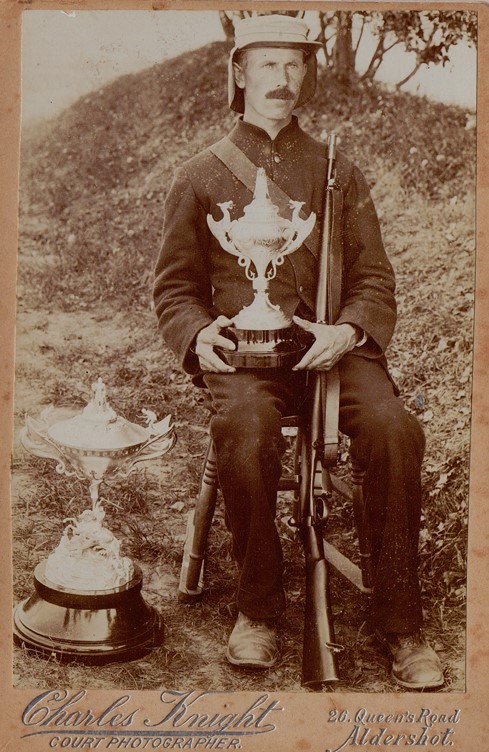
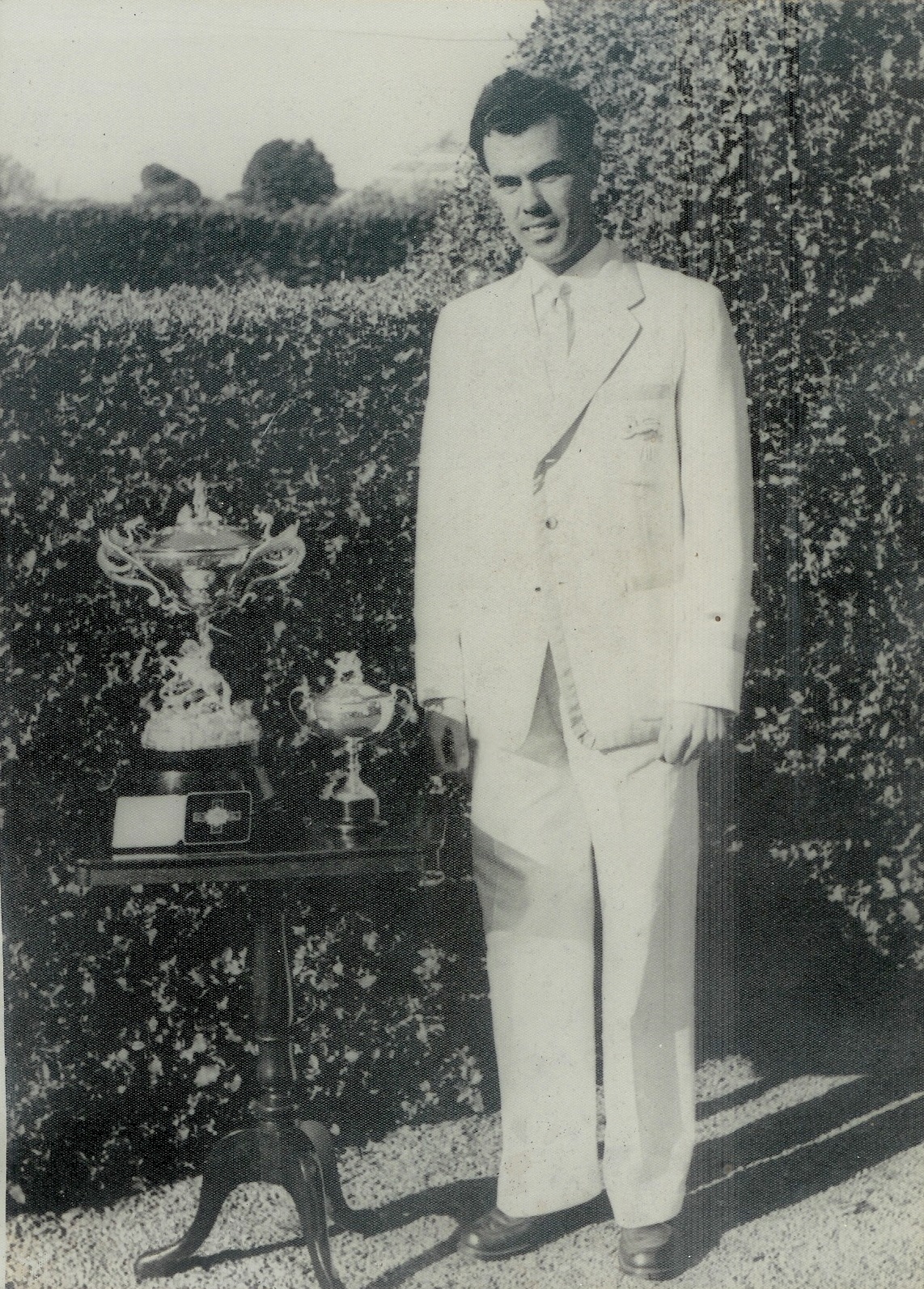
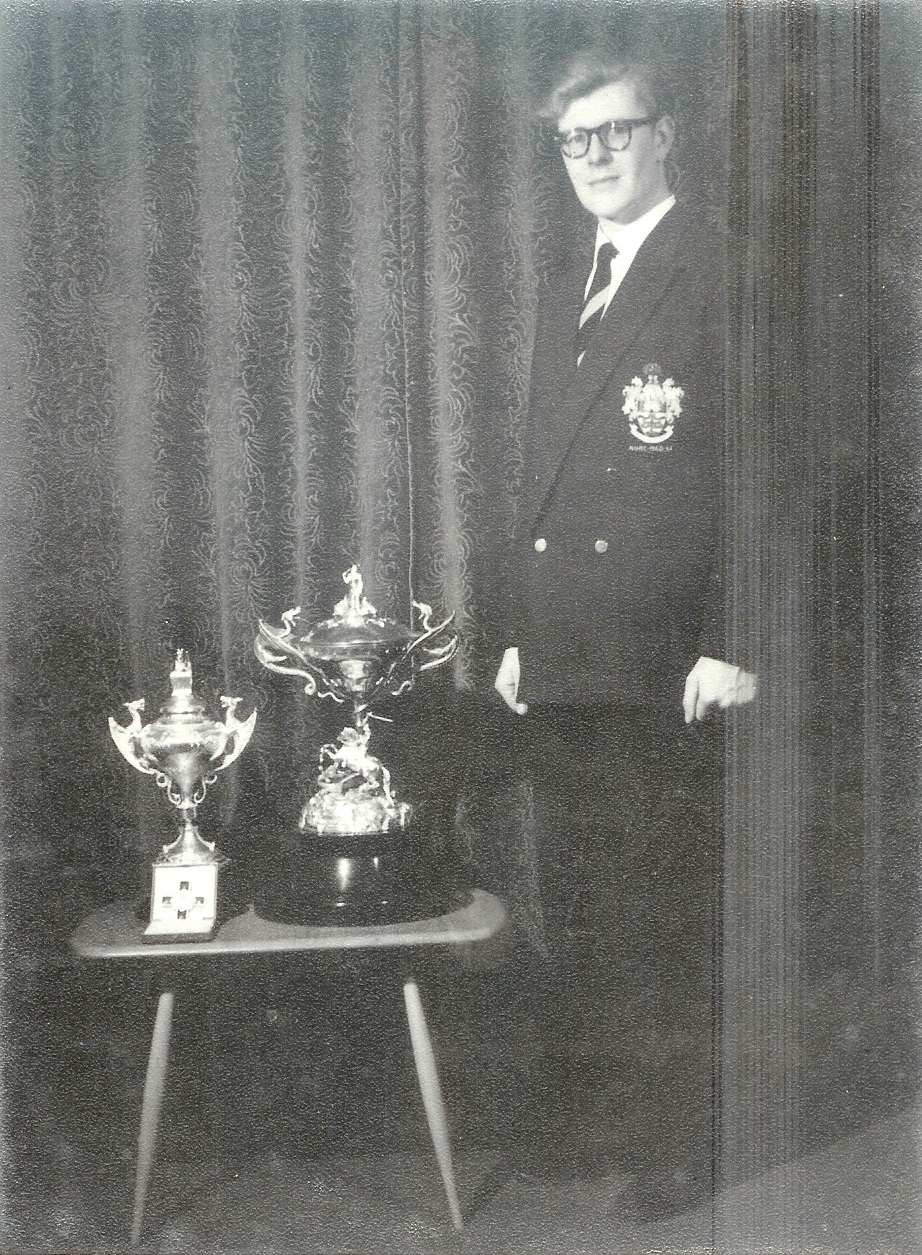
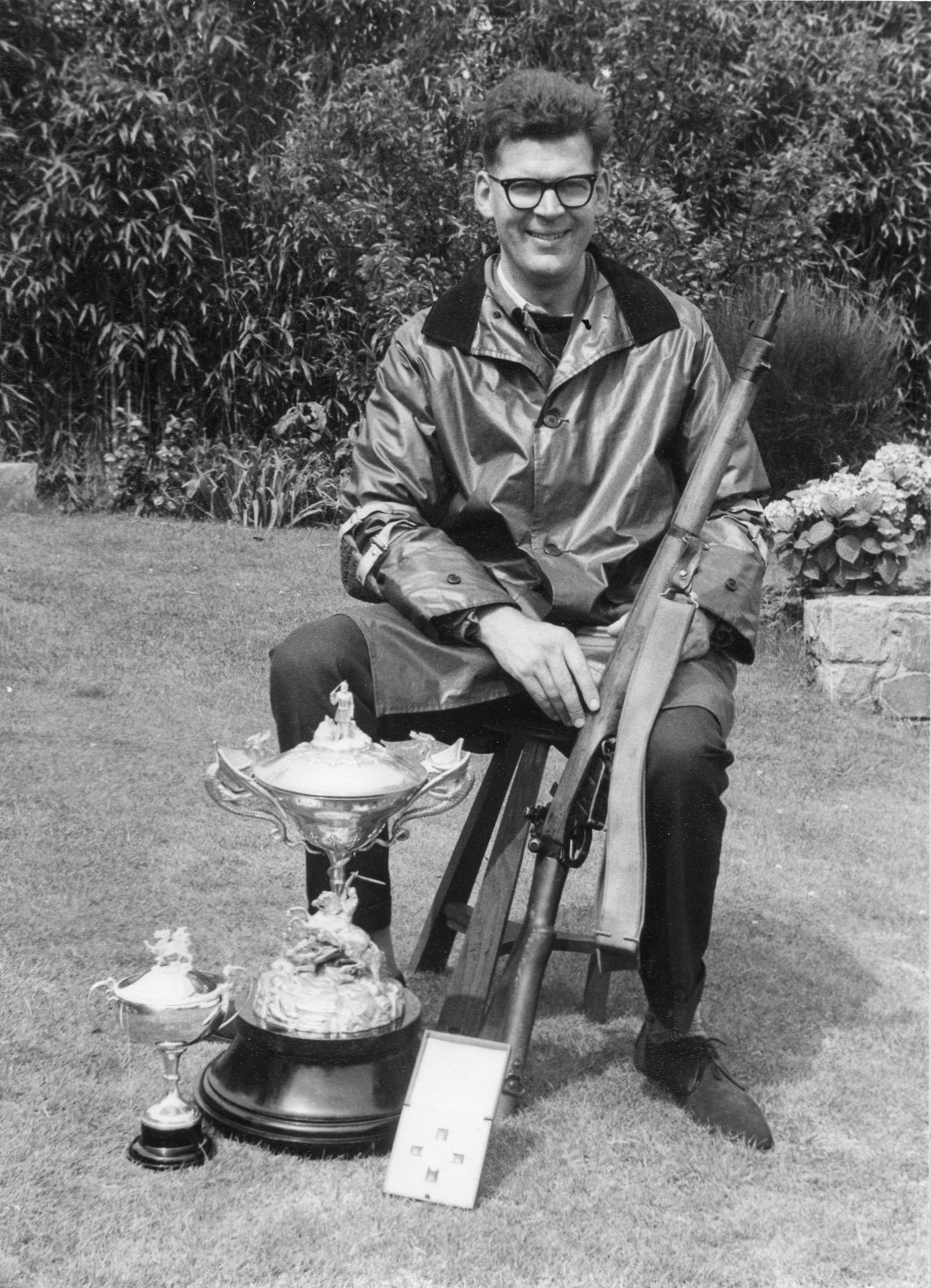
Guernsey’s St George’s winners: John Mahy (1901), Geoff Martel (1958), Frank Le Maître (1961) and Mike Martel (1968)
Lt Gen Sir Philip Neame, who served as Guernsey’s Lt Governor from 1945 to 1953, was a key part of the club’s success in the post-world-war era. Whilst his efforts to revive the Guernsey militia proved to be in vain, a small but significant by-product of his initiative was the eventual building of the Fort Le Marchant rifle range using funds from the States and the disbanded militia in 1955. A year later, Jack O’Toole purchased and donated a plot of land near Fontenelle Bay, and with further contributions from Mesdames A Elliott and R Randall a clubhouse was built. The club continues to call Fort Le Marchant its home today.
Another leading figure either side of World War II was Captain Don Bisset. In 1920, Bisset won the Stock Exchange, the Telegraph and the All Comers’ Aggregate at Bisley. In 1937 and 1938, he won the Times and the Duke of Gloucester’s Prize (now the Prince of Wales), respectively, two of the main Imperial Meeting competitions.
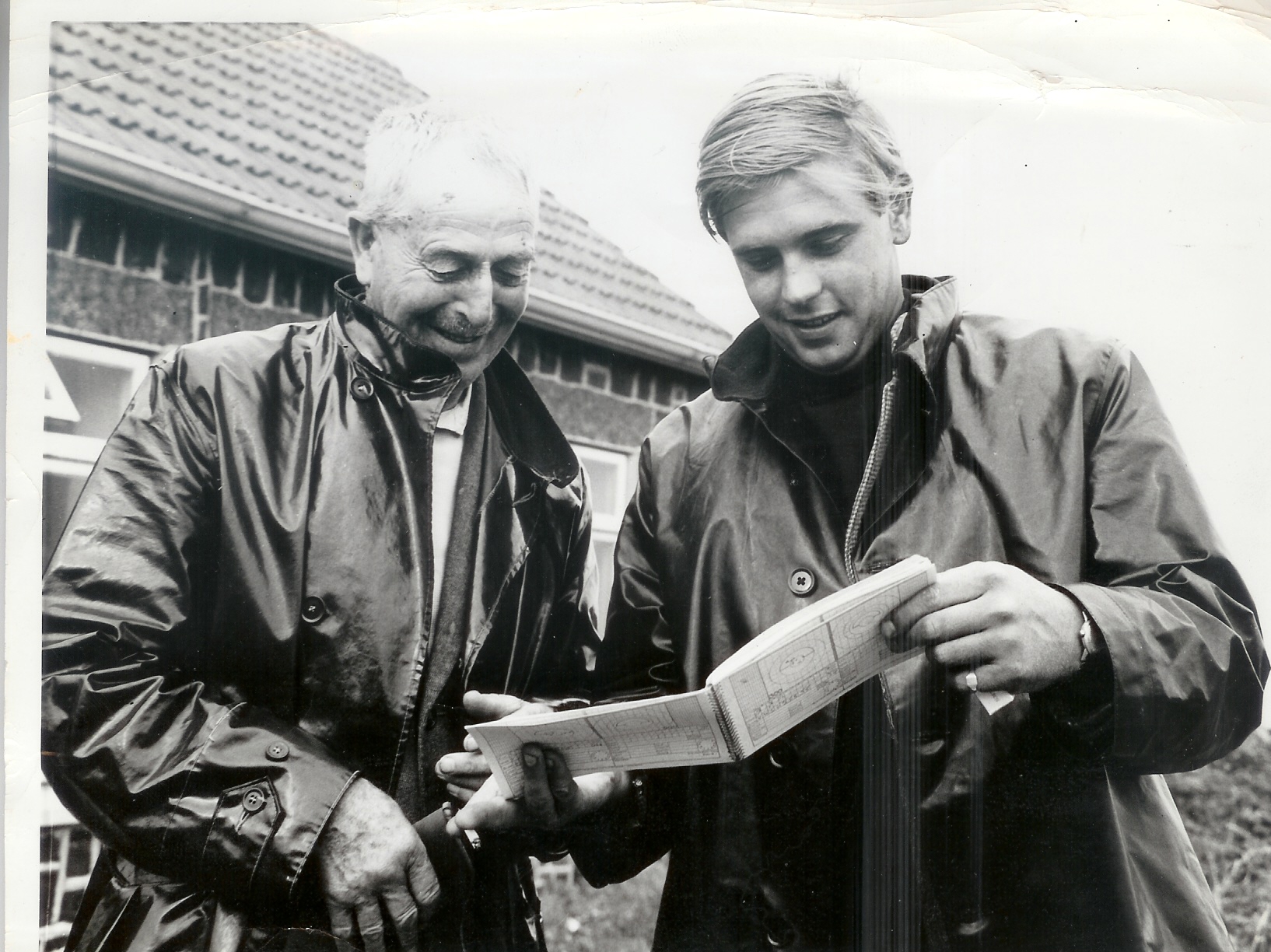
The National Rifle Association first sent a representative team to compete against the Guernsey Rifle Club in 1938. Guernsey won the match by nine points, with the top score of 99 out of 105 being made by Bert Falla. In 1957, the match became a permanent annual fixture contested at the then-newly-opened Fort Le Marchant ranges and has been shot every year since, with the exception of 2020 and 2021 due to the COVID-19 pandemic.
The 1950s also saw the establishment of the club’s two major annual competitions, the Summer Prize Meeting – which continues to attract visitors from the UK and further afield – in 1952 and the Island Championship, the most coveted local trophy, in 1958.
Perhaps the greatest-ever shooter at the Fort Le Marchant range, Richard Perkins would go on to win the Island Championship a record 12 times – double that of any other marksman – over a remarkable span of thirty-six years between 1976 and 2012.
Bob Courtney was another leading light during the 80s and 90s, winning five Island Championships in six years from 1981 to 1986 and three major Bisley honours including the Conan Doyle and the Admiral Hutton.
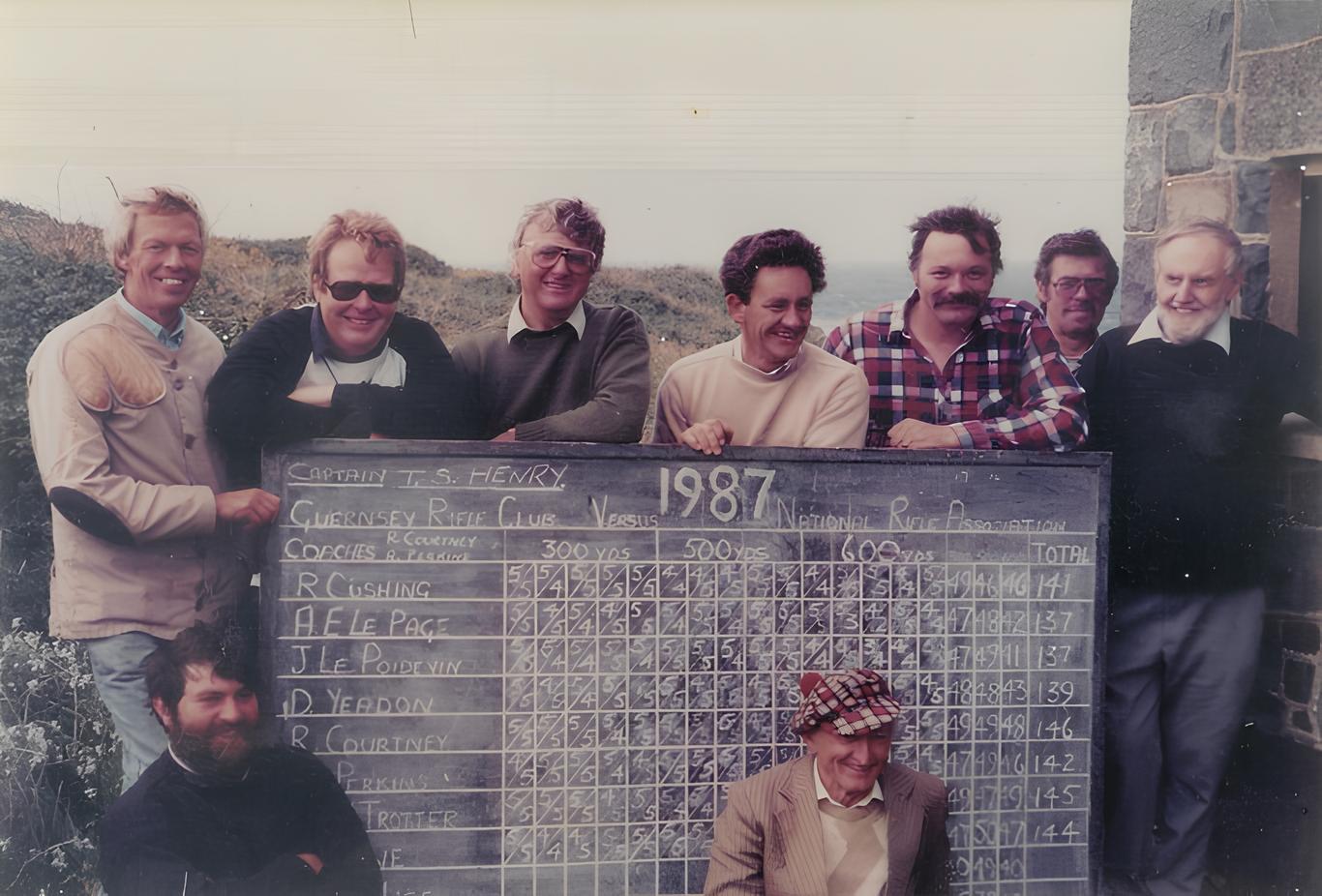
The millennium brought with it a new generation of successful Guernsey riflemen and further triumphs at Bisley and in Guernsey.
In 2008, Nick Mace finished as runner-up in the Bisley Imperial Meeting’s Grand Aggregate to win the Silver Cross. Peter Jory too has challenged for the Grand Aggregate Gold Cross until late into the meeting, and Peter, his brother Adam, and Nick have won no fewer than eighteen individual trophies at the National Rifle Association’s annual meeting.
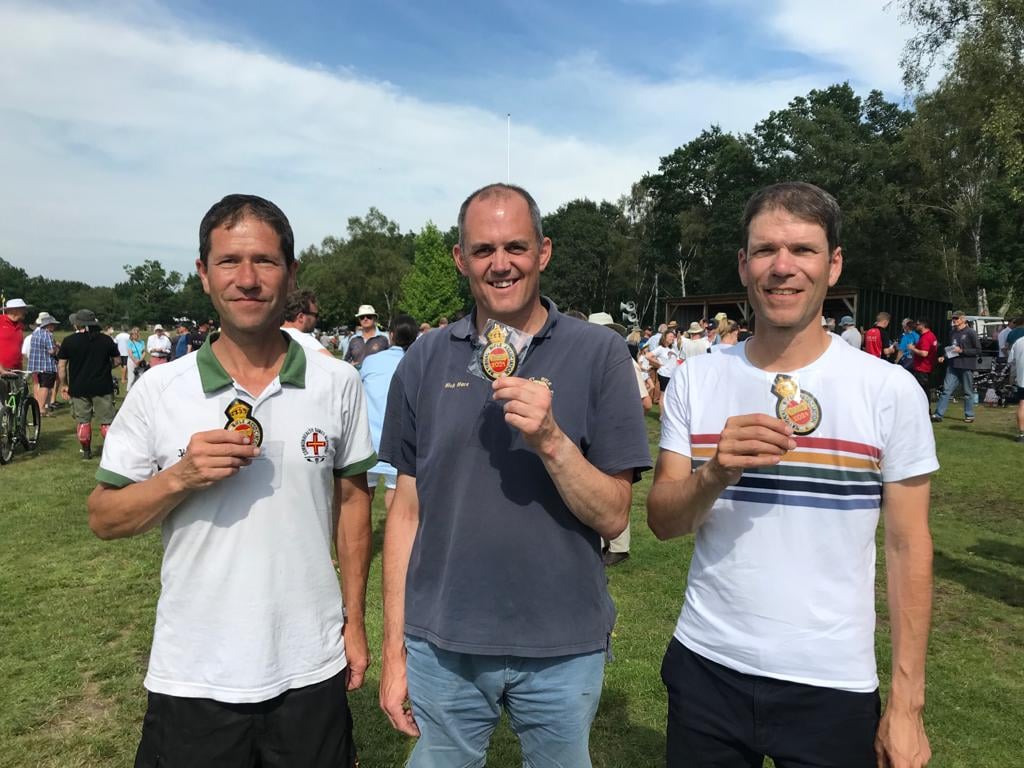
Locally, Peter Jory, Philip Ogier and Nick Branch have amassed six Island Championships apiece as they each continue to hunt down Perkins’ magnificent twelve championship titles, their progress stalled in recent years by an influx of first-time champions in an increasingly competitive field.
Guernsey won the Overseas match and the Dominion Prize for the first time in its history in 2009 under the captaincy of Peter Jory. Two further Dominion Prizes came in 2017 and 2021 – the latter arriving under the captaincy of Peter’s successor, Nick Thompson – before Guernsey won the Overseas again in 2024, captained this time by Mike Creber.
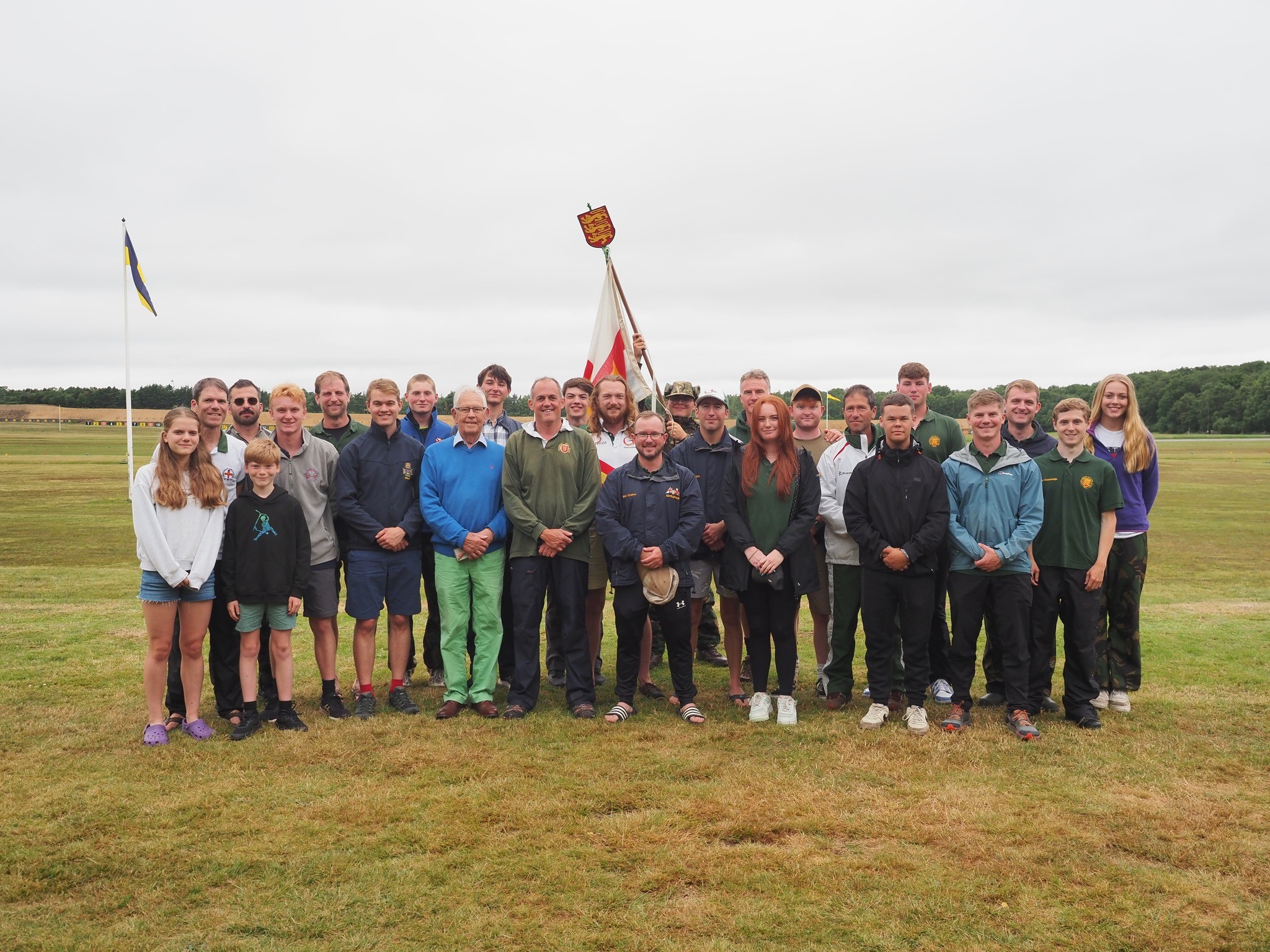
Text by Charlie Brewin, last updated 2024. For more information see ‘History of Guernsey Rifle Shooting’ (2016) by Bruce Parker and Mike Martel.
 Guernsey Rifle Club